
Key takeaways
- For most drivers, a universal-fit set from FH Group in neoprene or PU leather is the realistic way to cover a seat well under $150, while buyers who want…
For most drivers, a universal-fit set from FH Group in neoprene or PU leather is the realistic way to cover a seat well under $150, while buyers who want a near-factory fit and who drive a common vehicle should look at custom-fit lines from makers such as Coverking or Covercraft, which often sit at the upper end of or above the cap for full sets. The right choice depends mainly on whether your seat shape, airbags and rear bench will accept a universal cover.
The sections below set out materials, fit categories and airbag considerations, then name the lines the makers describe. Where a listing gives limited specs, that is stated plainly.
Our top picks

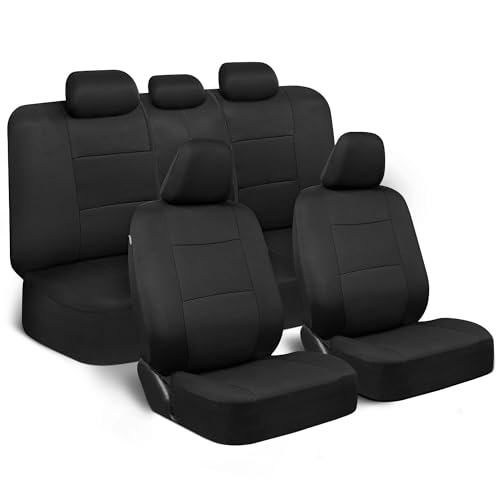
As an Amazon Associate we earn from qualifying purchases at no extra cost to you.
At a Glance: Seat Cover Options
| Line | Best for | Key stated specs | Limits |
|---|---|---|---|
| FH Group universal neoprene full set | Water and spill protection, active families | Listed as universal fit, airbag compatible, low-back front covers, split bench rear, washable, for SUVs and sedans | Universal sizing can bunch on unusual seat shapes |
| FH Group PU leather front covers (1-piece) | A cleaner, leather-look interior for the front | Listed as airbag compatible and suited to most sedan, SUV and van front seats | One piece per seat; check seat type and integrated headrests |
| FH Group leatherette full set | Three-row or seven-seat vehicles | Listing describes universal fit, airbag compatible, split bench covers and 3 mm breathable foam padding | Padding thickness changes feel; not breathable like fabric in heat for some wearers |
| FH Group cloth, 3D air mesh, quilted leatherette | Warm-weather comfort or a plush look | The maker’s collections list these material types | Details differ by item |
| Coverking neoprene (custom fit) | Closer vehicle-specific fit | Maker describes CR-grade neoprene inner layer with a water-resistant Neotex shell; options for headrests, armrests, split-bench center consoles, airbag cutouts and map pockets where applicable | Vehicle-specific; availability depends on your model and year |
| Coverking Premium Leatherette (custom fit) | Leather look with fitted design | Maker lists compatibility with side airbags and seat functions; UV-resistant, stain-resistant vinyl | Custom lines are generally higher in cost |
| Motor Trend AquaShield and Covercraft Carhartt | Work trucks and rugged use | Reviewers report both are designed with side-airbag deployment in mind | Often fronts only or truck-specific; check fit |
What to Look for in a Seat Cover
Universal versus custom fit
Universal covers use stretch panels and straps to fit a range of seats. FH Group’s own collection pages list hundreds of universal sets, including front sets, rear sets and full sets, which is why this class dominates under a modest budget. Custom-fit covers are cut for a specific make, model and year, so they follow headrests, armrests and seat controls more closely. Coverking describes cutouts for features such as airbag locations, center consoles and map pockets “where applicable”. If your vehicle has unusual seats, such as integrated headrests, built-in seat belts in the seat, or power controls on the side, a universal cover may not sit right.
Airbag compatibility: do not guess
Many seats contain a side airbag in the outer bolster. A cover that blocks or slows the airbag can be a safety concern. Look for covers that the maker states are airbag compatible, and note that this usually means a tear-away seam or a cutout. FH Group lists several of its universal sets as airbag compatible and Coverking states its Premium Leatherette is compatible with side airbags. Even so, confirm the wording against your vehicle manual, and if the manual warns against seat covers on seats with side airbags, follow it. Never alter a cover in a way that covers the airbag tag or seam.
Materials
- Neoprene: The FH Group neoprene full set is described as waterproof and washable; the Coverking neoprene line uses a neoprene inner layer with a water-resistant outer shell. It suits beach, gym and pet use.
- PU leather or leatherette: Wipes clean and looks tidy; some listings describe foam padding. Can feel warm in hot weather and cool in cold weather.
- Cloth and 3D air mesh: More breathable and often more comfortable in summer, though easier to stain.
- Quilted designs: Added cushion; extra thickness may change seat posture slightly.
Front only, rear only or full set
The front seats see the most wear, so front-only sets cost less and cover the highest-use area. Rear covers protect against kids, pets and cargo. Full sets cover everything and keep the cabin looking consistent. If you have a split-folding rear bench, make sure the rear cover supports the split; FH Group lists split-bench rear covers in several full sets.
Installation and daily use
The maker publishes installation videos for both universal and custom lines. Universal covers usually need hooks, straps and sometimes headrest removal. Take time to tighten straps so the cover does not slide, because a loose cover can shift the driver’s seating position or bunch under the seat belt. Never route a strap across the seat belt buckle or in a way that blocks buckle access.
Pick X If…
| Your situation | Pick this | Why |
|---|---|---|
| Tight budget, standard seats | FH Group universal front set | Cheapest class; the maker lists many options |
| Kids, spills, pets | Neoprene full set (FH Group) | Waterproof and washable per the listing |
| Hot climate, no leather feel | Cloth or 3D air mesh | More breathable |
| Fitted look on a common vehicle | Coverking neoprene or leatherette | Cut for the vehicle; includes airbag cutouts per the maker |
| Truck or work vehicle | Motor Trend AquaShield or Covercraft Carhartt | Reviewers note they are made for rugged use and airbag deployment |
| Three-row vehicle | Full set for three rows (FH Group lists a seven-seater leatherette set) | Covers every row in one purchase |
Budget Tiers Without Prices
The budget tier is universal front sets and basic cloth or polyester covers. The mid-range tier is universal full sets in neoprene or leatherette, which is where FH Group’s range sits and where most buyers land under the cap. The upper tier is custom-fit covers, and for a full set in a custom line the cost can exceed the cap depending on the vehicle. If you want a custom look on a budget, consider custom fronts only, since the maker sells front and rear separately in some lines.
Fit and Care Notes
- Measure and compare. Check seat type (bucket, bench, split bench), headrest type (adjustable or integrated) and whether side airbags or heated or ventilated seats are present.
- Heated and ventilated seats. Follow the vehicle manual before covering them. Thick covers may reduce effect or trap heat; if the manual forbids it, do not cover.
- Cleaning. Follow the care tag. Neoprene and leatherette usually wipe clean; some covers are machine-washable, others are not.
- Re-check straps. Tighten after the first few drives, since covers settle.
- Child seats. Read the child-seat and vehicle manuals about installing over seat covers; some car-seat makers prohibit it.
Sizing a Universal Set Sensibly
Because universal covers are sized in broad ranges, a few measurements help. Note whether your front seats are bucket seats with adjustable headrests, whether the headrests are integrated into the seat back, and whether the rear is a solid bench, a 60/40 split or a 40/20/40 split. A 60/40 split needs two separate back covers, which is why the maker lists split-bench rear sets. Also note the seat height and width, because a cover meant for low-back seats will not stretch over a tall seat back. The FH Group neoprene full set is listed with low-back front covers, so owners of high-back seats should look at the high-back variants the maker also sells.
Think about how you use the car. A pet owner wants coverage that wraps the sides and the rear bench; a commuter who only wants to protect the driver’s seat from wear can buy a single front cover. If the seat has a built-in seat belt or a power adjustment on the side, make sure the cover leaves those controls accessible. Leave the seat belt buckle fully visible and usable, since a buried buckle is a safety problem and a nuisance.
Alternatives
- Seat protectors or throw covers: Cover only the cushion or back; fast to install but less coverage.
- Back-seat protectors and kick mats: Targeted at kids and pets; cheaper than a full set.
- Cargo liners and floor mats: Protect surfaces that seat covers do not, and FH Group’s collection also lists these.
- Professional upholstery repair or reupholstery: Costly and likely beyond the cap, but permanent.
Frequently Asked Questions
Are universal seat covers a good fit?
They fit many standard seats, but they use straps and elastic to adapt and can bunch on unusual shapes. If your vehicle has integrated headrests or side controls, check the listing carefully. Custom-fit lines are cut for the vehicle and fit more closely.
Are seat covers safe with side airbags?
Only covers that the maker states are airbag compatible should be used on seats with side airbags, and even then you should follow your vehicle manual. FH Group and Coverking both state airbag compatibility on certain lines. If you are unsure, ask the cover maker or a dealer.
Which material is best for pets or kids?
Neoprene and leatherette are the usual choices because they resist liquids and wipe clean. The FH Group neoprene set is described as waterproof and washable. Cloth is comfortable but stains more easily.
Can I put covers over heated or ventilated seats?
Some vehicle manuals advise against it, and thick covers can affect performance. Check the manual and the cover maker’s instructions before installing. If either says no, skip the cover.
Do I need front and rear covers?
Front seats get the most use, so many drivers cover only those. If you have kids, pets or carry cargo, rear covers are worth adding. Full sets also keep the interior matching.
How do I keep a cover from sliding?
Use all supplied straps and hooks, tuck the edges into the seat gaps and recheck tightness after a few drives. A loose cover can bunch and shift your seating position. Keep straps clear of seat belt buckles and seat controls.
